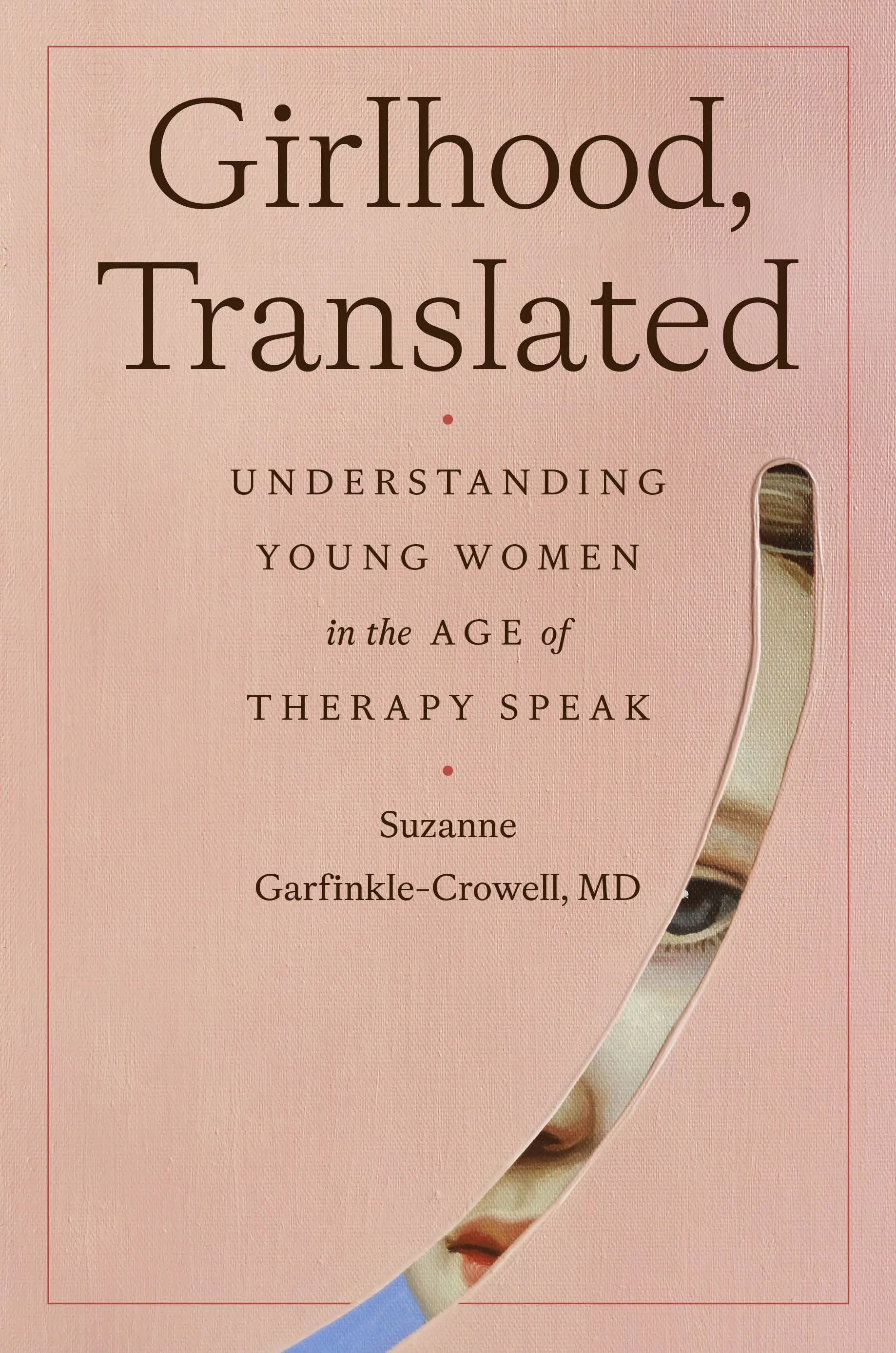
Dr. Garfinkle-Crowell’s new book Girlhood, Translated: Understanding Young Women in the Era of Therapy Speak, from Crown Publishing is out now!
In the book, Garfinkle-Crowell reveals how “therapy speak” and the culture of self-diagnosis is reshaping the inner lives of adolescent girls and young women—and what to do about it.
My name is Dr. Garfinkle-Crowell, and I’m a psychiatrist.
Every day in my office, I work with young women who view their feelings through the language of psychiatric diagnosis: “It’s my ADHD, my anxiety, my attachment issues.” Parents often react with dismissiveness or panic. I have written a book—Girlhood, Translated—to tell the story of our “Therapy Speak” era: how we got here, why we feel so stuck, and how we can find a way out.
Critics of “therapy culture” have observed that over-reliance on diagnostic labels is not helping young people get better. For centuries, teenage girls have been called “hysterical” and “crazy,” and now they are doing the same to themselves. But girls talk this way for a reason. We (in medicine, Pharma, and on social media) have sent them a clear message over the past decades: your suffering only matters if it has a medical label.
Girlhood, Translated will bring you into the therapy office with me, into the rich lives and stories that show what it’s like to be a young woman today. My goal is to help us translate therapy speak. It’s a book for parents, teachers, coaches, pastors—anyone who cares about girls. And of course, for the young women themselves, who deserve to be seen not just in medical categories, but with true understanding, fuller respect, and a deeper kind of care.
From Girlhood,Translated